

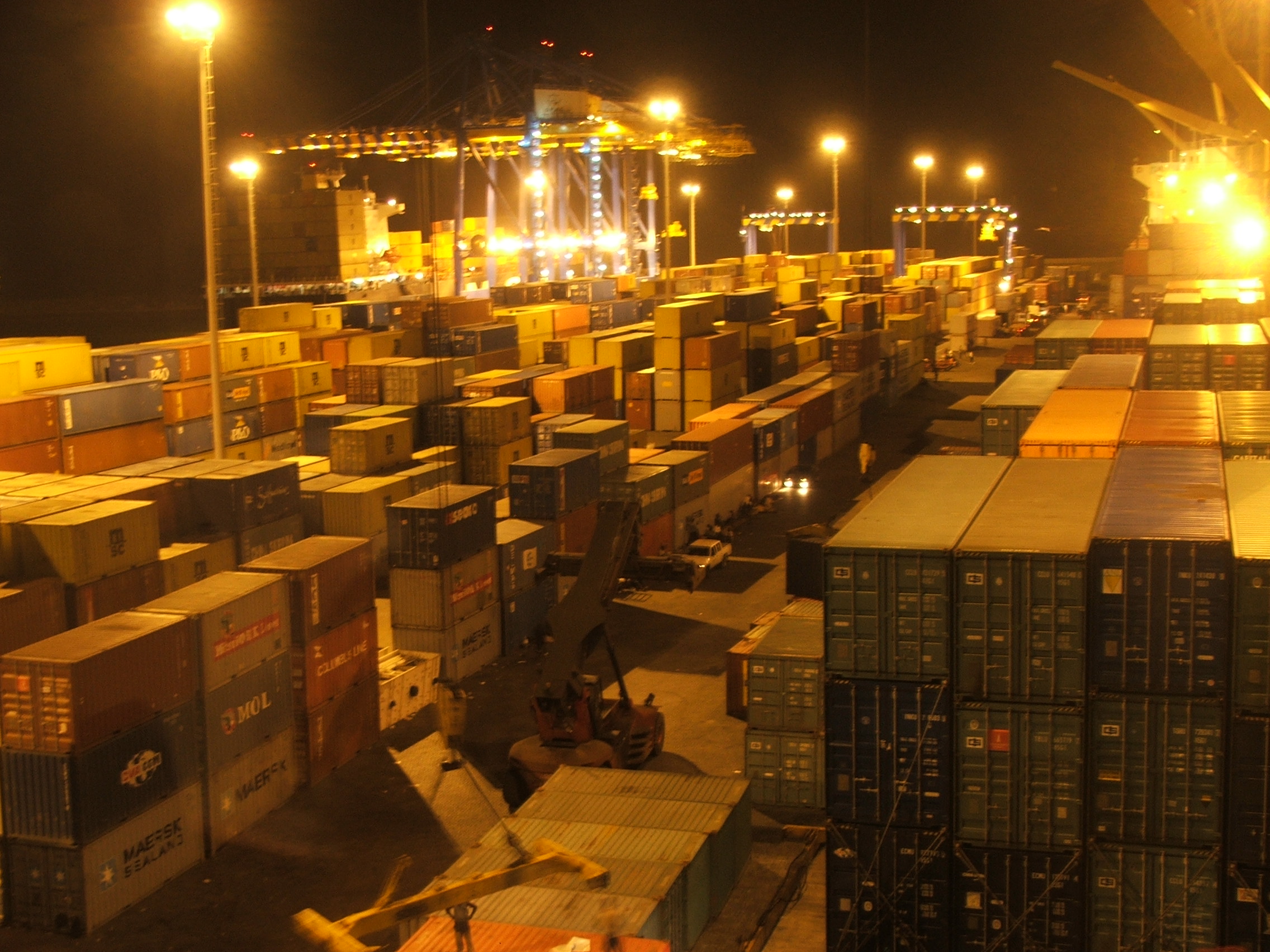
Plotting an evidence-based strategy and playbook for channeling African-American partnerships, capital, expertise, and networks into an AfCFTA-integrated Africa is a must in an increasingly AI-driven global economy. With such issues as the growing global wealth gap and inequality between the developed and developing world, Africa needs new partners and strategies to translate its potential into landmark economic results because time is definitely of the essence.
Africa is building a continental market through the African Continental Free Trade Area (AfCFTA). At the same time, a Black American population estimated by Pew Research Center at 49.2 million in 2024 represents substantial economic and professional capacity. Nielsen projects Black consumer buying power at $2.1 trillion in 2026. These developments create an opportunity to connect African market integration with diaspora partnerships, expertise and investment. Turning that opportunity into results requires practical institutions and trusted channels for collaboration.
The above description does not claim that Black American consumer spending is the same thing as investable wealth. It most certainly is not, nor that Africa can simply replicate China's 1980–2010 trajectory by such analogy. The narrower more defensible execution is that a coordinated diaspora capital, talent, and advocacy strategy, timed to AfCFTA implementation, is one of the most significant economic development opportunities available today. What should be imperative is that the policies, partnerships, execution formula and financial infrastructure to make it work at scale need to be the frontier focus of the leadership on both sides working with internationally trusted partners such as the Africa Energy Fund (AEF). African countries need to strengthen the quality and accountability of its leadership, strengthen its democratic culture and improve, institutions like the Africa Union (AU) and regional organisations that, in my view, must do more to advance Africa’s competitiveness. Africa must remain united and non-aligned whilst seeking a permanent seat at the UN Security Council, because her security and sovereignty cannot afford to remain a decision of other climes.
Beyond today’s geopolitical tensions, in the future event that America and/or Europe experiences nuclear fallout for some unforeseen reason, as the global economy continues to be rattled with conflicts of all kinds, the Black American communities should have the right of first refusal to look towards the motherland for a new beginning.
Following from the above, when you look at the big data, it is clear that AfCFTA is already moving real money. Afreximbank’s African Trade and Economic Outlook 2025 projects intra-African trade to grow at an average annual rate of 6.6% over 2025–2028, reaching $261.4 billion in 2028. These are forecasts, not realised results. The case for AfCFTA is to deepen regional trade by reducing barriers and expanding productive links. The Pan-African Payment and Settlement System (PAPSS) is also intended to make cross-border payments in local currencies easier. The scale of any saving depends on the transaction and participating institutions; a uniform 20–30% reduction should not be assumed.
Manufacturing and agri-food processing offer an important route away from raw commodity exports toward value-added production. Industrial investment and research and development can accelerate that shift. The diaspora already contributes substantially through remittances, but remittance totals, foreign investment and development assistance must be compared on consistent geographic and time bases. They are distinct flows, and money sent to support families is not automatically available for investment. Remittances plus diaspora savings are a much larger pool than remittances alone; a World Bank study published in 2011 estimated annual African diaspora savings at around $53 billion. This is a historical estimate, not a current measurement of the savings of all people of African descent. It nevertheless illustrates why savings and remittances should be considered separately when designing investment vehicles. Diaspora bonds are a proven, if underused, instrument, Nigeria's 2017 $300 million diaspora bond received $570 million in subscriptions for a $300 million issue, according to Nigeria’s Debt Management Office — equivalent to 90% oversubscription, in sharp contrast to Ethiopia's earlier, less successful 2008 and 2011 issuances — a real-world natural experiment in what governance, legal protection, and marketing have done for diaspora capital mobilization. A related policy question is how credit ratings reflect African economic conditions. In my view, stronger African analytical capacity and credible locally informed rating institutions would improve the debate about risk, capital costs and investment. Their credibility must rest on transparent methods, independence and evidence.
The African Development Bank estimates annual infrastructure needs of $130–170 billion and a financing gap of $68–108 billion. The total requirement and the unfunded gap are different measures. Diaspora investment could contribute to closing the gap through bonds, equity and venture capital, alongside other sources of finance. Black America’s economic base should also be framed honestly. Nielsen’s projected $2.1 trillion in buying power for 2026 measures consumer spending capacity, not household wealth or investable capital. The above underscores consumer spending power, not household wealth or investable capital as this is a distinction worth stating up front, because conflating the two is the single most common and most misleading error in commentary on this topic. Federal Reserve analysis of the 2022 Survey of Consumer Finances put median Black family wealth at $44,900, compared with $285,000 for white families. These dated survey figures underline why spending power cannot be treated as a pool of investment capital. Black America's spending scale is enormous and growing; its investable capital base is smaller, more constrained, and unevenly distributed, which is precisely why institutional vehicles (pension fund allocations, diaspora bonds, endowment and partnerships, professional-association investment clubs) matter more than appeals to individual discretionary giving.
The imperative that Africa and Black American bloc must synergize for a key future leap as one, brings us to look at the China comparative model: China’s reform-era growth combined domestic savings, foreign investment, industrial policy and contributions from overseas Chinese investors and professionals. The lesson worth taking away from that history is not to "replicate the model" — China's path relied on political and institutional conditions that Africa's 54 states divide by imperialism do not uniformly share, but the specific, transferable mechanism: is diaspora capital and know-how, when it has a low-friction, trustworthy channel to flow through, can activate and catalyze industrialization faster than aid or arm's-length FDI alone can. AfCFTA's job is to build that channel at the continental level; the diaspora strategy's job is to fill it as methodically as possible. Transport technology and local vehicle manufacturing are possible areas for such collaboration. The practical question is how African firms can develop, license and commercialise useful technology through well-governed partnerships, with intellectual-property claims assessed on evidence.
Leveraging Six concrete, non-overlapping channels, each tied to an existing mechanism rather than a hypothetical one:
The Diaspora bonds and AfCFTA-linked infrastructure debt is a learning curve and Nigeria's 2017 oversubscription and Ethiopia's undersubscription show that success requires dual-jurisdiction registration (as Nigeria did with the U.S. SEC and UK Listing Authority), competitive real yields, and transparent use-of-proceeds reporting. Then there is a Pan-African, AfCFTA-branded diaspora infrastructure bond - rather than 54 separate, competing national instruments; this would let African-American and wider diaspora capital fund cross-border trade corridors, the exact infrastructure AfCFTA implementation is bottlenecked on.
Also the PAPSS-integrated remittance-to-investment rails is another important window. Lower-friction payment infrastructure could support voluntary investment alongside remittances. Converting part of a household’s available surplus into equity, venture or bond investment requires appropriate products, regulation and investor protection. It must not divert money needed for essential household consumption, and infrastructure alone cannot eliminate capital scarcity.
Furthermore, HBCU–African university R&D partnerships is key to unlocking this synergy under analysis. Historically Black Colleges and Universities collectively manage a growing but still modest endowment base and produce a disproportionate share of Black American STEM and engineering graduates. Formal research and exchange partnerships with African universities and AfCFTA's planned continental innovation initiatives are a lower-capital, higher-leverage channel than direct investment for transferring applied R&D capacity to the Africa continent. The other much needed pathway is use of Professional and trade-association capital pooling and this speaks to Black American professional associations (medical, legal, engineering, finance) and Black-owned asset managers represent an underused aggregation point, which when optimally pooled means professionally managed allocations carry far more institutional credibility with African regulators and co-investors than fragmented individual remittances. Without a doubt manufacturing and agri-processing co-investment, supporting a shift toward manufactured and processed goods rather than raw commodities. In this ecosystem lies the highest-multiplier platform for diaspora-linked capital to enter, because it captures value-addition rather than extraction margins. Then finally there is the Talent and expertise circulation back into Africa, not just capital. This reinforces the return-migration fellowships, remote/hybrid technical secondments, unique Engineering knowhow and diaspora advisory boards and companies such as those run by Dr. Kimberly Arrington of Conrad Global, Dr. Uchenna Ezeokeke of Heureka Trading & Consulting SL, HRM Dr. Oji of Africa Energy Fund (AEF) and Nestar Energies, Jay Rosborough of Tier 1 Gold & Diamonds, Ambassador Tyrone Moodley of Ndiepi, Anthony Miller Jnr. of Powerseen and many other thousands of consummate diaspora professionals are amongst egg heads who undoubtedly will bring value to AfCFTA's Regional Economic Communities, modeled on an innovative adapted strategy, not one copied from diaspora technical-return programs used elsewhere. The bigger picture is to ensure a quickened synergy of the black races' two ultimate forces which were once separated by over four centuries of imperialist hiatus, reverses course and bridge a long awaited gap which results in an economic and holistic leap forward for shared prosperity and global competitiveness.
Editorial note: This contributed opinion has been edited for clarity and factual precision. Historical estimates and projections are labelled, the diaspora bond subscription and infrastructure gap figures have been corrected, and unverified numerical and intellectual-property claims have been removed. Policy proposals and political assessments express the author’s views.
Sources and further reading
- Pew Research Center: Black Americans, 2024 population data ↗
- Nielsen: Black consumer buying power projection ↗
- Afreximbank: African Trade and Economic Outlook 2025 ↗
- Nigeria Debt Management Office: 2017 Annual Report ↗
- World Bank: Preliminary Estimates of Diaspora Savings, 2011 ↗
- African Development Bank: 2026 annual meetings address ↗
- Federal Reserve: Wealth differences in the 2022 survey ↗
Contributed opinion by His Excellency Hon. Ebube Ebisike George. Edited for clarity and factual precision; see editorial note and sources.