

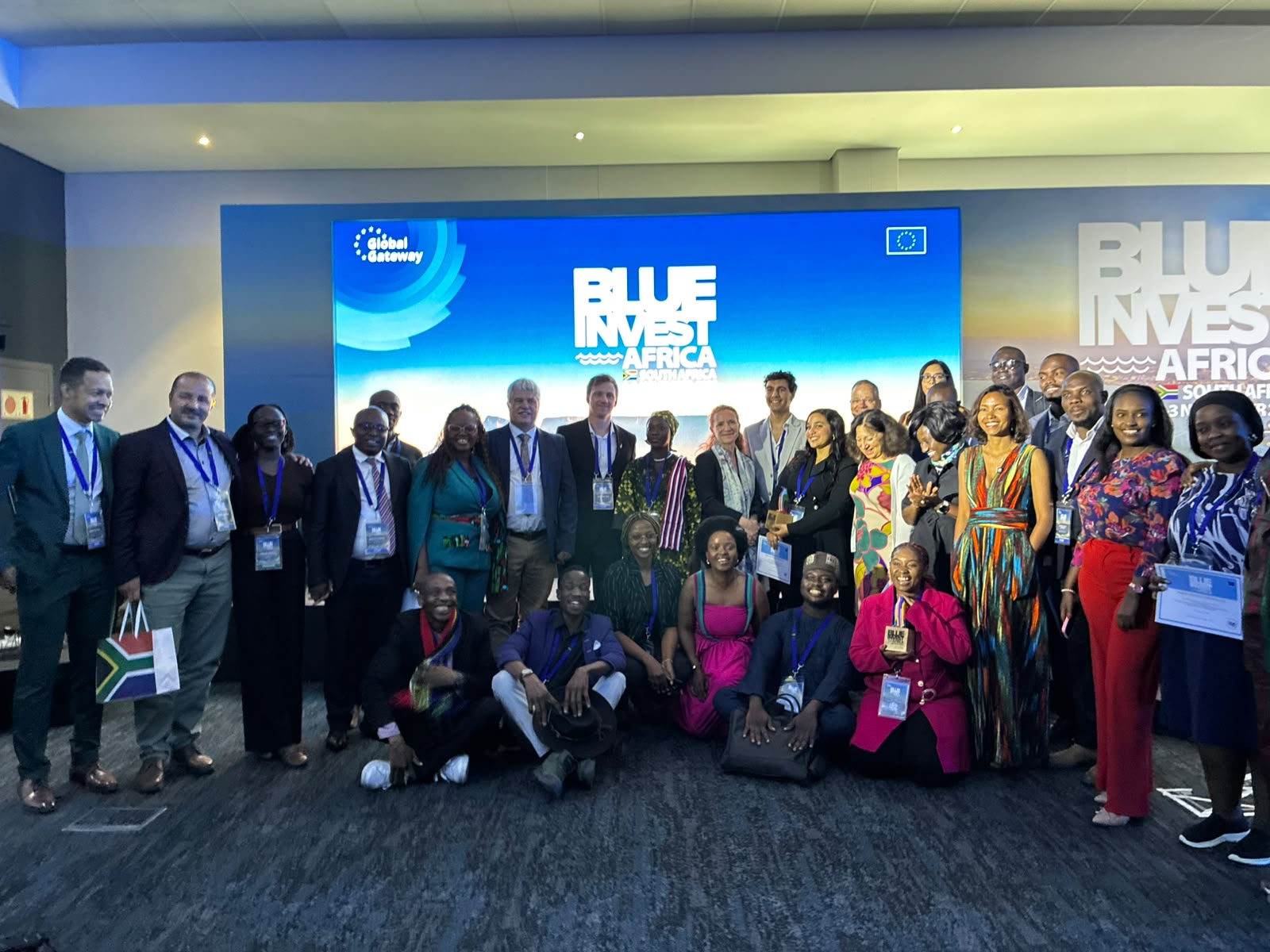
Africa's next economic transformation may be shaped not only by what happens on its land, but also by how effectively the continent develops, manages and commercialises its oceans, inland waters and maritime resources.
The 2026 BlueInvest Africa Summit, taking place in Cape Town on 2–3 November, has brought this opportunity into sharper focus, connecting African entrepreneurs, international investors, policymakers and development institutions around the commercial potential of the continent's blue economy.
Initiated by the European Commission, BlueInvest Africa has developed into an important platform for connecting innovative African businesses with international capital, technical expertise and strategic partners.
The 2026 edition has showcased 24 selected ventures from a wider application pool spanning 38 African countries, demonstrating the geographical and commercial diversity of Africa's emerging blue-economy ecosystem.
Beyond fisheries: A new industrial opportunity
The blue economy is frequently associated with fishing and maritime transport. However, its economic potential extends much further.
Aquaculture, marine biotechnology, renewable energy, shipbuilding, ocean technology, logistics, coastal tourism, marine conservation and circular manufacturing all represent opportunities for investment, industrial development and employment.
The projects showcased at BlueInvest Africa illustrate how African entrepreneurs are developing solutions to challenges ranging from food security and waste management to maritime intelligence and sustainable industrial production.
These are not simply environmental initiatives. They represent emerging commercial markets that require capital, infrastructure, technology, skills and access to international value chains.
Investment must translate into bankable projects
Addressing the summit, South Africa's Deputy Minister of Trade, Industry and Competition, Hon John Steenhuisen, called for increased investment, innovation and strategic partnerships to unlock Africa's blue economy.
His central message was that the continent must move beyond recognising economic opportunities towards developing bankable projects capable of attracting and absorbing investment.
He also highlighted South Africa's growing shipbuilding capacity, noting that the country exported more than R5.7 billion worth of ships in 2025, compared with R2.5 billion in 2016.
This is an important indicator of the possibilities for industrial collaboration, technology transfer and regional maritime manufacturing.
Africa should not merely serve as a supplier of raw materials and maritime resources. It must increasingly participate in designing, manufacturing, processing, financing and distributing the products and services that emerge from its own economic ecosystems.
The importance of Africa-Europe cooperation
The European Union's involvement through BlueInvest Africa presents an opportunity to deepen economic relations between African and European markets.
However, meaningful cooperation must extend beyond funding announcements and institutional engagement.
It must result in commercially sustainable enterprises, local beneficiation, technology partnerships, skills development and stronger African participation in global markets.
The opportunity is to build partnerships in which African enterprises retain meaningful economic value while international investors gain access to viable businesses, emerging markets and sustainable investment opportunities.
Connecting capital with African innovation
One of the most important contributions of BlueInvest Africa is its emphasis on direct investor engagement.
African entrepreneurs often possess viable ideas, technical expertise and market opportunities but face difficulties accessing appropriate financing, strategic partnerships and international distribution networks.
Investment readiness is therefore not simply about preparing a presentation. It involves sound governance, credible financial models, market validation, operational capacity, measurable impact and a realistic pathway to commercial growth.
The investor pipeline associated with the 2026 edition illustrates the range of capital requirements, from smaller financing needs to substantial growth investments.
The challenge now is to convert these introductions and investment discussions into funded projects, commercial partnerships and measurable economic outcomes.
A continental opportunity requiring regional integration
Africa's blue economy cannot be developed through isolated national initiatives.
Maritime logistics, fisheries, aquaculture, manufacturing, ports and coastal infrastructure are interconnected economic activities. Their development requires coordinated regional policies, efficient trade corridors, harmonised standards and investment partnerships.
The African Continental Free Trade Area provides an important framework for expanding markets and strengthening regional value chains.
Countries must increasingly view their maritime capabilities as complementary assets within a wider African economic system.
From potential to prosperity
The central question emerging from BlueInvest Africa is not whether Africa possesses the resources, entrepreneurial talent or market opportunities to build a competitive blue economy.
It is whether the continent can mobilise the capital, institutions, technology and strategic leadership required to turn these advantages into productive economic assets.
Africa's oceans and inland waters represent more than natural resources. They are potential engines of industrialisation, employment, food security, technological advancement and international trade.
The next phase must be measured not by the number of conferences held or opportunities announced, but by the enterprises financed, industries established, jobs created and value retained within African economies.
Africa's prosperity will depend on its ability to connect its resources with innovation, its entrepreneurs with capital, and its markets with the world.
Full article supplied by Oliver Chikodzore via Africa Rising TV.