

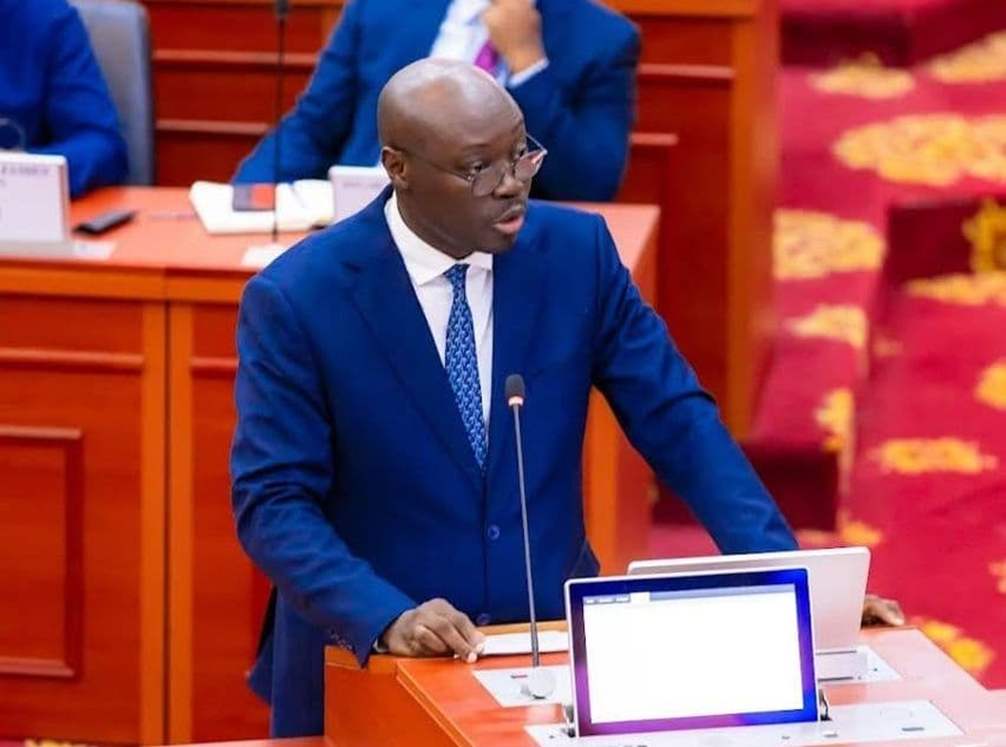
Ghana has announced a US$10 billion economic transformation programme covering 2027 to 2030, placing domestic production and private investment at the centre of its next phase of economic policy. Finance Minister Dr Cassiel Ato Forson presented the strategy to Parliament on 12 November 2026 as part of the 2027 Budget Statement and Economic Policy.
The New Economy Programme has eight interconnected pillars: macroeconomic stability and affordable finance; commercial agriculture; energy infrastructure; critical minerals value addition; tourism, culture and creative arts; textiles and garments; pharmaceuticals and biomanufacturing; and technology. Its premise is that these sectors cannot develop in isolation. Reliable energy supports factories, agriculture feeds processors, and finance enables enterprises to invest and expand.
Government intends to concentrate public resources on strategic infrastructure and commercially viable project preparation, while assigning private enterprise the principal role in investment, innovation and employment. The budget earmarks GH¢30 billion for the programme in 2027, supported by changes to the primary surplus target and anticipated revenue from tax reforms and compliance.
Why the next phase of recovery is different
The plan comes at a point when the benefits of macroeconomic improvement have become visible in national indicators, but the distribution of those benefits remains an open question. The World Bank's August 2026 Ghana Economic Update reported real growth of 6 per cent in 2025 alongside improved fiscal and external conditions. It also warned that employment creation had not kept pace with the growing working-age population and that poverty and external shocks remained concerns. The challenge facing the government is therefore not simply to maintain a favourable growth rate: it must create an economy in which more workers can earn stable incomes and businesses can expand without being repeatedly disrupted by inflation, expensive credit or currency instability.
The programme departs from a narrow emphasis on commodity production. Exporting a mineral brings in foreign exchange, but additional stages of production can support a wider network of domestic firms: laboratories, machinery maintenance companies, logistics providers and professional services. Processing crops into food and industrial materials offers a similar possibility. The significance of the eight pillars is their proposed relationship to one another. A new factory, for example, needs reliable electricity, finance for equipment, trained workers and a market large enough to justify the investment. Moving one constraint while leaving the others unresolved may do little to improve its commercial prospects.
How the financing model would work
The budget proposes reducing the primary surplus target by one percentage point of GDP over the programme period and mobilising additional revenue equivalent to half a percentage point of GDP through tax reforms and improved compliance. The primary balance, which excludes interest payments, is intended to remain positive at 0.5 per cent of GDP on a commitment basis. In practical terms, the government intends to make room for investment while continuing to collect enough revenue to cover non-interest spending. This is different from claiming that all government spending will be covered by its revenues: interest payments remain substantial.
The 2027 expenditure framework projects total capital spending of GH¢98.4 billion, of which GH¢30 billion is associated with the New Economy Programme. These annual cedi allocations should not be confused with the four-year dollar commitment. The investment programme will need annual budget authorisation, project selection and actual financing releases to become a reality. The tax revenue assumptions will also matter. If collections fall short of forecasts, the government may have to adjust the timing or scale of projects rather than risk renewed fiscal pressures.
What would make the programme investable?
Domestic and international investors should look beyond broad sector announcements. Their decisions will depend on the details of site development, access to electricity and water, conditions for operating leases, procurement rules and the likelihood of obtaining payments from buyers. One practical test of the government's commitment to private enterprise will be whether smaller Ghanaian firms can participate without possessing the same access to capital or administrative resources as large multinational companies.
There is also a case for regional commercial partnerships. Manufacturers could source components and services from neighbouring African economies, while export-oriented firms could develop distribution relationships beyond Ghana's borders. The African Continental Free Trade Area provides a framework for those relationships, although market access still depends on applicable rules, standards and practical border procedures. The World Bank's August 2026 report on African integration highlighted the need to make regional production networks and cross-border systems work together, rather than relying on trade agreements alone.
Measuring transformation rather than expenditure
The government proposes an annual investment-grade readiness report and targets roughly 8 per cent real growth by 2030 under the first pillar. These ambitions should be monitored alongside actual investment, permanent jobs, wage growth, new export products, and the financial viability of completed facilities. Public expenditure is an input, not proof of transformation. Publishing project-level progress and explaining any departures from the budget would give taxpayers and businesses a clearer sense of whether economic stability is being converted into productive strength.
For investors, the important distinction is between a government announcement and an investment-ready opportunity. Project schedules, procurement processes, financing arrangements and operating terms will determine when businesses can participate. The budget promises rigorous project appraisal and transparent reporting, commitments that will need to be assessed against delivery.
As Ghana approaches 70 years of independence, its approach also has continental relevance. Other African economies seeking to move beyond commodity dependence will be watching whether the programme creates productive jobs, raises exports and preserves fiscal stability rather than simply increasing public expenditure.
Sources
Government of Ghana, 2027 Budget Statement and Economic Policy, pp. 21–25, paras. 192–255. Additional budget context: pp. 74–79, paras. 794–829.
Article supplied by Gilbert Boakye · Ghana 2027 Special Report.