
PRESS RELEASE
Afreximbank calls on African miners to take bold steps to take ownership of the continent’s resources
Cape Town, South Africa, 5 February 2025 — Africa must take bold steps to take ownership of its resources, create jobs and build industries that will ensure the prosperity of future generations, the African Export-Import Bank (Afreximbank) told African leaders, policymakers, mining industry leaders and global partners at African Mining Indaba 2025 in Cape Town, South Africa, on Sunday.
In a keynote address at the Indaba ministerial symposium, Mr Denys Denya, Senior Executive Vice President of the Afreximbank Group, argued that the continent was at a crossroads and could either continue exporting its wealth and remain a marginal player in the global economy, or take bold steps to take ownership of its resources.
He observed that “while the global mining industry generated approximately US$1.7 trillion in revenue in 2023, Africa’s share of this wealth remains disproportionately small.” “Our continent extracts the raw materials that power global industries, yet it is estimated that we retain as little as between 4% and 20% of the total value of our minerals because of minimal local processing and limited downstream development. The consequences? Lost economic opportunities, exposure to volatile commodity cycles and continued dependence on external markets for refined products derived from our own resources.” “The choice is ours. The time to act is now. Governments, financial institutions, investors and industry stakeholders, let us work together to build an Africa where mining is not only about extraction, but also about transformation, innovation and wealth creation,” Mr Denya said. “Africa has the resources, commercial potential and strategic frameworks needed to move from a resource-dependent continent to an industrial powerhouse. However, success will depend on bold and decisive action by all stakeholders. Policymakers must implement clear and enforceable regulations that require local value addition and create environments conducive to investment. Private-sector investors must increase their capital and technology commitments to develop processing, refining and manufacturing facilities.”
Reversing this trend required bold and coordinated action, he argued. “We must move beyond extraction and invest in refining, smelting and advanced manufacturing. African countries must increase their capacity to process minerals such as bauxite, lithium, cobalt and iron ore locally.”
He added that regional collaboration is essential, as no single country can build a mining value chain in isolation.
Mr Denya emphasised the importance of the African Continental Free Trade Area (AfCFTA) in developing intra-African mineral value chains and strengthening cross-border collaboration, adding that attracting capital for mining-related infrastructure, technology transfer and skills development is essential.
“Our mining policies must also prioritise environmental, social and governance standards, ensuring that mining benefits communities rather than displacing them,” he said, adding that this approach would create millions of skilled jobs for young people and reduce dependence on volatile global markets while strengthening intra-African trade.
Reiterating Afreximbank’s commitment to supporting Africa’s mining sector and ensuring that mineral wealth drives economic growth rather than perpetuating resource dependence, Mr Denya announced that, over the preceding three years, the Bank had approved more than US$1 billion to support mining and minerals projects across the continent. These included financing the development and construction of a bauxite processing plant in Guinea, supporting the expansion of a manganese processing plant in Gabon, and providing working capital for a diamond company in Botswana.
Other major projects supported by the Bank include a petrochemical fertiliser plant in Angola, a titanium dioxide pigment plant in South Africa, and a feasibility study for a limestone mine processing plant in Malawi, he added.
Mr Denya said that the establishment of the US$10 billion AfCFTA Adjustment Fund, managed by FEDA, Afreximbank’s impact investment subsidiary, would provide vital financial support to countries and businesses transitioning to the new trade regime, including those in the mining sector. He added that the Bank’s efforts to harmonise standards and implement the African Collaborative Transit Guarantee Scheme would also facilitate the seamless movement of minerals and mining equipment across borders, reducing logistical bottlenecks.
Afreximbank is also drawing on digital platforms, such as the Africa Trade Gateway and the Pan-African Payment and Settlement System, to enable efficient transactions and market access. This would ensure that Africa’s vast mineral wealth is used to drive industrialisation, value addition and economic resilience across the continent, he added.
Mr Denya further emphasised that Afreximbank, working with development partners, is spearheading the development and expansion of industrial parks and special economic zones (SEZs) to address infrastructure challenges that hinder industrial growth.
One of the most transformative initiatives under this pillar has been the electric vehicle battery manufacturing special economic zones in the Democratic Republic of the Congo and Zambia. This project positions Africa at the centre of the global energy transition through pioneering battery SEZs intended to make both countries globally competitive investment destinations for the electric vehicle battery value chain.
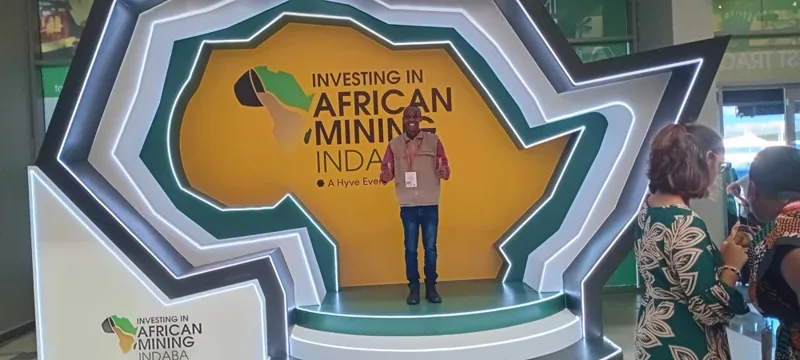
African Mining Indaba 2025, taking place from 3 to 6 February, is the leading gathering where African policymakers, industry leaders and global partners work to shape the future of Africa’s mining sector.
END
About Afreximbank:
The African Export-Import Bank (Afreximbank) is a pan-African multilateral financial institution dedicated to financing and promoting intra- and extra-African trade. For 30 years, Afreximbank has deployed innovative structures to provide financing solutions that help transform the structure of African trade and accelerate industrialisation and intraregional trade, thereby supporting economic expansion in Africa. A strong advocate of the African Continental Free Trade Area Agreement (AfCFTA), Afreximbank launched the Pan-African Payment and Settlement System (PAPSS), which the African Union (AU) adopted as the payment and settlement platform to support implementation of the AfCFTA. Working with the AfCFTA Secretariat and the AU, the Bank established a US$10 billion Adjustment Fund to help countries participate effectively in the AfCFTA. At the end of December 2023, the Bank’s total assets and guarantees stood at approximately US$37.3 billion, and shareholders’ funds amounted to US$6.1 billion. Afreximbank is rated A on the GCR International Scale, Baa1 by Moody’s, A- by Japan Credit Rating Agency (JCR), and BBB by Fitch. Over the years, Afreximbank has developed into a group comprising the Bank, its impact financing subsidiary, the Fund for Export Development in Africa (FEDA), and its insurance management subsidiary, AfrexInsure (the three entities form “the Group”). The Bank is headquartered in Cairo, Egypt.
For more information, please visit: www.afreximbank.com
Follow us on X | Facebook | LinkedIn | Instagram
Press contact:
Vincent Musumba
Manager, Communications and Events (Media Relations)
Email: press@afreximbank.com
9 - Afreximbank says Africa must take bold steps to own its resources.docx